Sunday, February 7, 2016

The Hoberman Sphere Cycle

Do you remember that kids toy from years and years ago that was basically this big ball that could be expanded and contracted? Google told me that it was called a Hoberman Sphere. More importantly, why would I even possibly be thinking about a Hoberman Sphere? The truth is that I've been trying to think of the perfect analogy to address what the American electorate is experiencing out of all of the candidates this season thus far (and really many, many seasons before too).

Much like Hillary Clinton, most candidates aim to start out there campaigns by positioning themselves as the moderate option in their party, the most appealing candidate that can be the collective solution to uniting the party and then America. There's a hiccup in that plan though...the rest of the candidates in the field.

My time in the political campaign world taught me something pretty obvious: the most energized people will always come out and vote in the primaries. Almost without fail, the most energized people are the people that occupy the more conservative pole (for Republicans) and more liberal pole (for Democrats) of their party. The people that occupy the poles often espouse very passionate views that are outside the moderate wings of their parties.

We were taught to target the people that were thought to be within that realm. They were targeted for donations, notional support, and even yard signs. Why? They were just the more likely people to agree because it meant that someone on the ballot would be in alignment with them when not really too many other candidates on the ballot had strayed away from the moderate faction of their party.

This means that many moderates in the party were not as routinely sought after, but, then again, the moderates were often very indecisive about their candidate choice and thus non-committal to a campaign because the field would be so crowded with candidates in the middle of the spectrum. So, over time, the moderates get left behind, as other candidates look to capitalize on the same amount of momentum and support that others are having by moving toward the more 'extreme' poles of their party.

Another key reason why there is this move to the poles (and we saw this at the Iowa Caucus and into New Hampshire and other early primaries) is to tap that energy into the poles and translate that into voter turnout. A lapse in voter turnout in a candidate's favor typically spells the end of the campaign and the hopes of that candidate. So, during the primary season, that's why we often see much more extreme rhetoric than what we might be accustomed to seeing when two candidates are squaring off against each other in the general election.

Once a candidate secures their party's nomination, the process begins to rollback many of the primary election pledges and stances that propelled a candidate to the front of the pack. Now what happens is the complete inverse (the contraction of the Hoberman Sphere). Party loyalists are invested, so it becomes a war for the independents and moderates of the opposing party. We now start to hear the media coverage of the battle for independents, who now become the key demographic in the general election.

Perhaps I'm being naive or optimistic, but there is a lot of alarm sounding around the country that our politics is more divisive than ever. Arguably, it's still divisive, but the problem might not be as dire as is being portrayed. Much of what we're seeing right now is over-reaction to what is still largely typical for the primary campaign season, albeit very atypical personalities that fuel the overall concern.

Of course, the sphere semi-expands again during the general election, though the tension is not aimed within the party. Candidates go into full-court press to do two things: make greater strides to move their platform to the middle and argue that their opponents is far extreme of the broader American electorate.

So, keep calm for now, readers. We're just along for the ride inside of a continuous, age-old political loop. The only way to exercise some measure of control it is by try and control who sits in the Oval Office.

Let me know what you think! Please comment and/or share!

Thursday, February 4, 2016

Not What It Looks Like

The Republicans are often under siege for waging a war against women and are commonly on defense over gender equality. However, on appearances, the party has long been pegged as the party for old white men. In recent years though, the party has been trying to make strides to improve perceptions. Going back the past two election cycles, the GOP has featured candidates such as Michelle Bachmann and Sarah Palin (as Vice President). This specific cycle is teasing out the potential inclusion of Governor Nikki Haley on the GOP ticket.

That brings us to Carly Fiorina.

Ever since announcing her candidacy, she has endured a roller-coaster ride between the lower and middle tiers of the Republican field, made headline news feuding with Donald Trump, and has generally stood her ground on every matter that has crossed her. Yet, she hasn't been able to catch fire and make a sustained run at a top-tier position.

Now, we have a conundrum. The lower-tier candidates have begun dropping out post-poor performances at the Iowa Caucus, but there are too many candidates for the main stage and not enough for the lower card debate. What this now unfortunately means for Mrs. Fiorina is that she's left without a stage as the candidate currently at the low end of the totem pole.

Everyone involved is acting 100% in accordance with the rules of the debate stage, but one almost needs to pause to ask if this is truly the wisest move for the Republican party. While it's certainly 'not what it looks like', the appearance is that the GOP is kicking the only woman in the race in their party to the curb. Perhaps in other years it might not be such a faux pas, but when the leading candidate in the opposing party is a woman, it certainly hurts any bona fides the party might be trying to establish.

Mrs. Fiorina would make the eighth participant on the debate stage on Saturday night, and the GOP has certainly showcased more candidates than that in previous debates. Of course though, it is more than likely that even a strong performance on the debate stage this weekend would yield negligible positive results for her. That's not the point.

The GOP can't afford any slip-ups that leave voters seeing them as unfair to women, especially as the general election comes up and the Republican ticket is probably pitted against Hillary Clinton. The notable exclusion of Carly Fiorina is truly not so egregious, but it's but another nail in the fence that holds back a broader base of women's support to the GOP.

In an another election that is likely to be so close (based on current head to head polls), any actions to estrange a constituency is simply bad for business for the Republican party.

Ultimately, there is no blow-back on the GOP and it helps mend the current public scourges against the party for excluding the only woman in the race on this side. Putting her back on the stage takes away minimal air time from the more main-stream candidates and alleviates the distraction that could likely be a factor in the social media realm during the debate.

Narrowing it down a little further, this is the morally correct thing to do. For so many candidates, next Tuesday will be the end of the road and everyone deserves the chance to make a very public final pitch. To deny that opportunity is contrary to American democratic principles. The GOP's best move is to reverse course and allow Mrs. Fiorina to participate this weekend. It might be the only play.

Wednesday, February 3, 2016

Digging the Political Grave

Senator Ted Cruz ran a masterfully tactical campaign in the closing days leading up to the Iowa Caucus. In fact, he ran a great campaign literally hours leading up to the casting of the first votes. An APN tweet from last week noted that Senator Rubio acts like he wants the Presidency the most, but Cruz is truly the one playing the game the best at this point.

Ground game, fundraising machine, and Iowa Caucus momentum aside, Cruz is on a different level than the rest of the candidates right now in the GOP field. Mr. Trump can bring the crowds and Governor Bush can lean on Right to Rise Super PAC, but their failures lie in their reliance on words. Cruz's multidimensional game includes actions that potentially no other candidate is readily conversant in so far.

However, Cruz's recent actions are tactically brilliant yet strategically short-sighted.

Since becoming very competitive with Mr. Trump in the weeks prior to the Iowa Caucus spanning into the hours before the initial voting, Cruz's "leak" about the Carson campaign suspension as well as 'Voter Violation' incident has sprung the campaign into a new light. Many of Cruz's competitors are attacking the campaign for dishonest, and Mr. Trump is going as far as calling for a nullification of the results of the Iowa Caucus and have a re-vote. That being said, the Cruz campaign has not done anything illegal and any movement to alter the results now ought to be out of the question.

Cruz is doing what it takes to win and doing it more than anyone else arguably on either side of the aisle. Even more than that, he knows it. Cruz was quoted by CNN as saying "I will apologize to no one for using every tool we can to encourage Iowa voters to come out and vote". The merits of the tactics aside, it is indisputable thus far that they have achieved results. That is the tactically brilliant portion of the argument.

There is an error to these ways though. These tactics largely rely on one thing to absolve the memory of their employment: momentum. In sports, they say that winning cures all ills. Much like in sports, the same applies in the political realm. A candidate can always brush away things he/she did or said when it results in a democratically elected win. At that point, the victories begin to mount and the momentum sweeps prior transgressions under the rug. That's it. That's the nature of this beast, compounded by the nature of a 24-hour news cycle.

But here's the hiccup in the philosophy. Hell hath no fury like a political candidate's supporters scorned. Similar to the hardened supporters of Mr. Trump, Cruz's allegiant supporters will not waiver despite the mounting allegations against the campaign. So, there's always a base for Senator Cruz to rely on. However, as candidates begin dropping out of the race, they remember their wronged candidate. That wronged candidate that was a manifestation of their own hopes and dreams for the country. An attack on their candidate is an inherent attack on them.

So, where do they go? The easy answer is not to Senator Cruz. Realistically, that support gets thrown to whoever is the antithesis to Cruz and who has the ability to defeat him. At this moment, that could very well be Senator Rubio. This is a worst-case scenario for the Cruz's campaign, as the surging Rubio, especially with a possible strong showing in New Hampshire under his belt, beginning to have support coalesce around him from all factions of the Republican party. The establishment is already anti-Cruz, but the supporters of the remaining candidates may also soon have reason to as well.

As the negative attention builds on Cruz's tactics (presuming there is more to follow), generally and newly uncommitted voters weigh two factors heavily as the primary tempo increases: electability and likability. With everything mentioned prior to this statement, the aggregate effect of these tactics, in addition to the media's likely demonization of Cruz will lead voters to feel positively about either that electability or likability, which spells trouble for the currently hot Cruz campaign.

The Iowa hurdle has sense been cleared, and now it's time for the Cruz camp to take a step back and take the long view in order to survive long-term. Relying purely on momentum may not be enough and, even worse, may be naive with just one very close victory in one primary thus far. From the outside looking in, Senator Cruz is in the act of digging a political grave for himself. Everything is still so early and not so far along that the ship cannot be righted, but the true conundrum is the following question. Does an overall strategy shift and denial of the tactics that have gotten him to this point take away from the appeal he has with his base and put a strangle on his ability to operate in the ways he has used to propel him toward the front?

Monday, February 1, 2016

On a Positive Note

Dating back to the Ronald Reagan's first term, the winning candidate has touted the positive messages. Though the campaigns might be run in a negative fashion, the core messages are still ones that are intended to inspire and cause people to believe in their country. Going backwards in time:
  • Barack Obama 2012: Forward
  • Barack Obama 2008: Change We Can Believe In
  • George W. Bush 2004: Yes, America Can
  • George W. Bush 2000: Compassionate Conservatism
  • Bill Clinton 1996: Building a Bridge to the 21st Century
  • Bill Clinton 1992: Don't Stop Thinking About Tomorrow
  • George H.W. Bush 1988: Kinder, Gentler Nation
  • Ronald Reagan 1984: It's Morning Again in America
Ronald Reagan's campaign slogan for 1980 stopped the trend, which was 'Are you better off than you
were four years ago?'. The question itself is an inherent attack vice a genuinely positive message, though the tone of the country and the political establishment was much different at that time. Fast forward to today, we're looking at a potentially different tone.

Over the last 32 years, the most positive message has typically won out, even as the nature of campaigns have been drowned in relentless negativity. Even as many campaigns have been run negatively, often through advertising and personal attacks, the candidate that most energetically pushed positive tones came away with the election victory. Former Presidents Reagan, Clinton, George W. Bush, and Current President Barack Obama were all noted as not only having significant energy, but they applied it to an overall positive message.

Let's take a look at the current front runners as of the Iowa Caucus polling:

  • Bernie Sanders: A Future to Believe In
  • Hillary Clinton: Fighting For Us
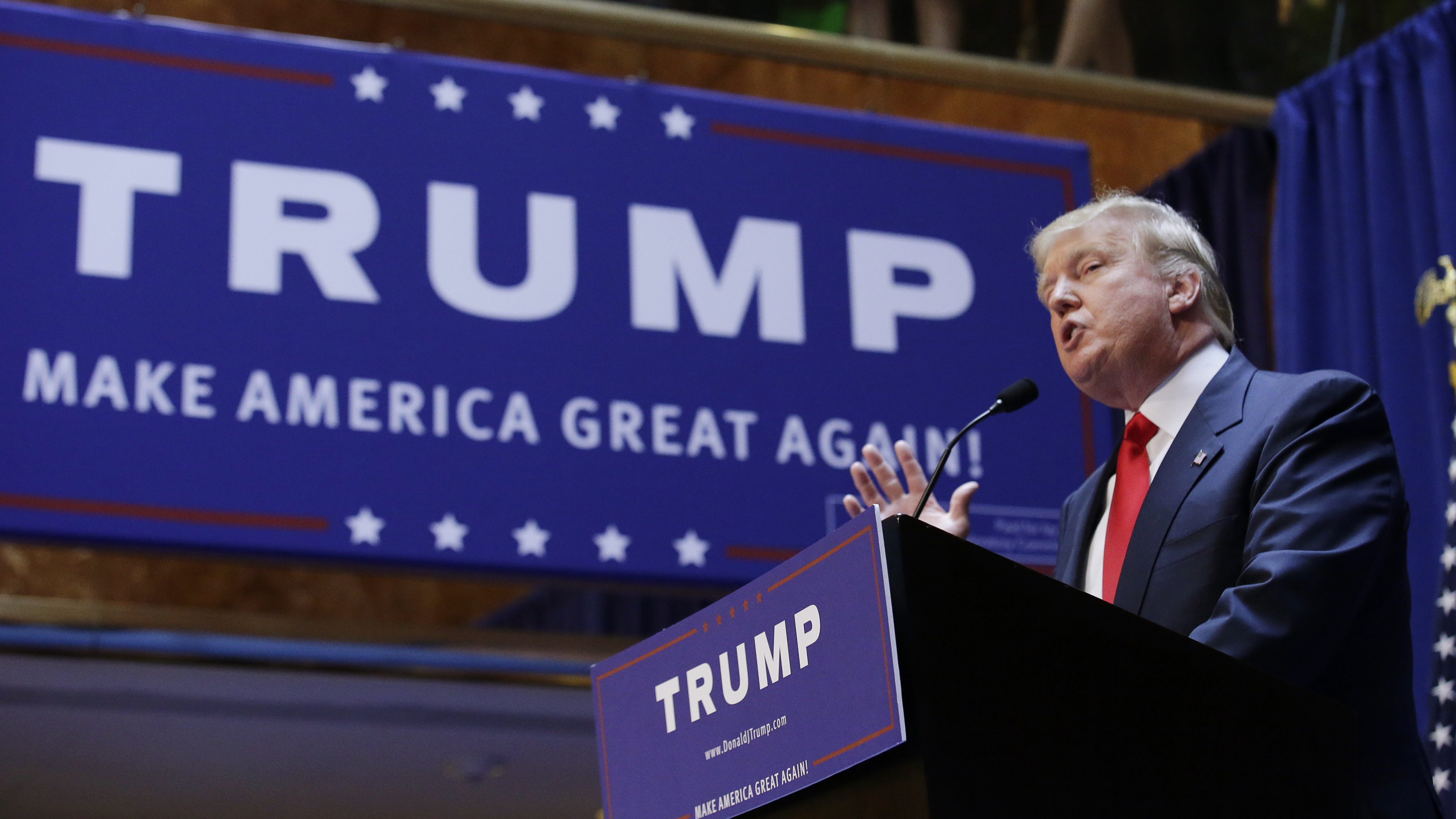
  • Donald Trump: Making America Great Again
  • Ted Cruz: Reigniting the Promise of America
  • Marco Rubio: A New American Century
While there are certainly other candidates that are promoting a positive tone, these five candidates are arguably the five most energetic candidates pushing this message to the electorate. That means something to many people. With as much disdain as the American people commonly have for the government and for whatever administration is in the Oval Office, a rejuvenating positive message is refreshing for many and provides hope for something new, more, and better going forward.

The nature of campaigns, specifically for some of these candidates, often take a very negative overture. Ultimately, as we know in American society, branding matters. The way these candidates brand themselves as the choice candidate for elevating the American people and moving us forward to a new level is what ultimately resonate. We choose to accept the good that people often times over the bad that they do. As such, we come to accept the people who exclaim their positive overtures.

It really should be no shock that these five candidates are at the top of their party going into the Iowa Caucus and will continue to sit at the top of their party's respective polls throughout most of the rest of the race. When this all raps up in November, I still believe that, regardless of the anomalous season so far, the most positive message and messenger will again prove victorious and will be sworn in one year from now. 

Sunday, January 31, 2016

Is America's Glass Ceiling Shatter-Proof?

In the lead-up to the GOP Debate on Thursday, a thought that I had buried away months ago aggressively returned as the attacks surged against Megyn Kelly. While I make no claim of support on her feud with GOP candidate Donald Trump, it is certainly difficult to ignore the enormous tidal wave of negativity that was predominately thrown her way. What ought to be even more difficult to ignore is the type of negativity she encountered. Regardless of where one leans on the issue that caused Mr. Trump to skip the debate on Thursday, it certainly feels more than fair to say that many have lost (or perhaps never had) the ability to maintain civility.

You can find the evidence on any social media or news outlet comments section. Pardon my language, but we read that Megyn Kelly was a 'bitch', 'slut', and 'whore', and those were some of the more tame comments in some cases.

What necessitated that type of response? Perhaps the explanation is as simple as this was a case of a small portion of Donald Trump's supporters going to bat for him (though way above and beyond the necessary means). I don't think we can be so sure that that's the sole explanation here though. I would submit to you that there is still an inherent double-standard that exists is enough places in our society.

What do I mean by enough? Translating it to the current primary election season, it is simply that the double-standard exists in enough places that it stymies momentum or even could outright block a candidate from receiving their party's nomination.

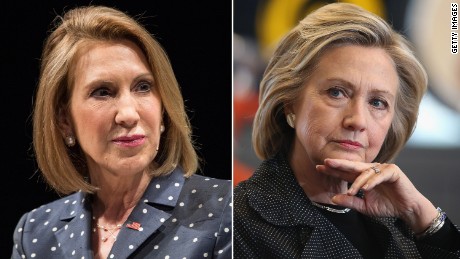
Taking a look at this election cycle, as well as the 2012 election season, Hillary Clinton, Carly
Fiorina, and Michelle Bachmann all hit or are hitting up against a glass ceiling.

I think it's fair to say that all three of these women's leadership styles all include an element of brusqueness. Additionally, I think it's fair to say that all three women are very passionate about their core issues and about the business of trying to lead America. As a result, that brusqueness comes out during policy speeches, town halls, debates, and rallies.

Enter the double-standard. My observations show a remarkably different take that we have with men still. If a man does not illustrate a certain level of sternness, he is deemed weak and therefore unworthy of the office of President. Mr. Trump's appeal, as well as the appeal of so many other men in both parties across many years of political races is based on a perception of strength.

It does not take long to find a 'Comments' section or a tweet that has something to the effect of 'Wow, she's being a real [insert flowery expletive here].'. Yet, if a male candidate took the opposing posture, we would be saying 'Jeb Bush just looks so soft'. Well, the truth is that many do say that. If Mrs. Fiorina, Secretary Clinton, or Mrs. Bachmann took a much softer stance, then they would simply go unnoticed and would be largely patronized by their competitors and the media throughout the election.

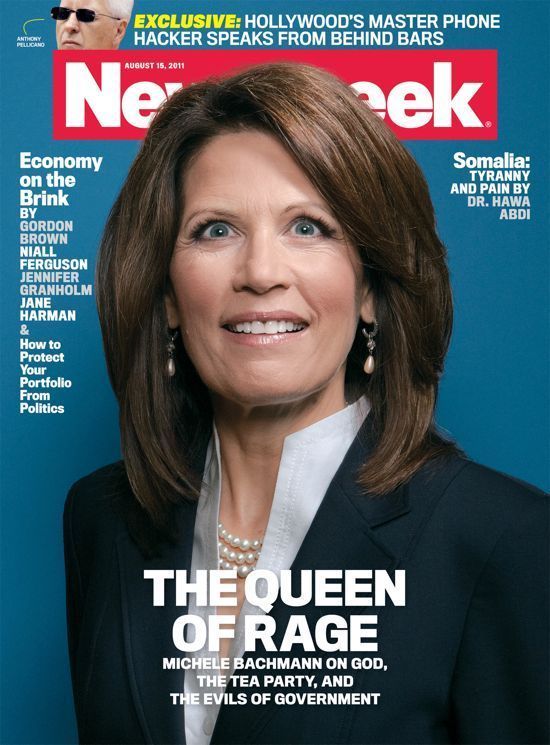
Going back to 2012, Mrs. Bachmann certainly was known to take very firm stances on a common conservative issues. Her more aggressive posture was also capitalized by being at the forefront of the rising Tea Party Movement. Let's not forget the Newsweek magazine front cover, which labelled Mrs. Bachmann as the 'Queen of Rage' and posted a non-flattering photo across the entire page. It certainly disrupt the campaign, since it came so early in the campaign, but it was arguably a contributing tone-setter to the electorate's perceptions of the congresswoman from Minnesota.

Even when these candidates are not speaking at the podium, they are often being judged by their looks. It's insane to have read that the posture of these candidates can be categorized as 'RBF', but it's just Mr. Trump or Senator Cruz relaxing in between questions.

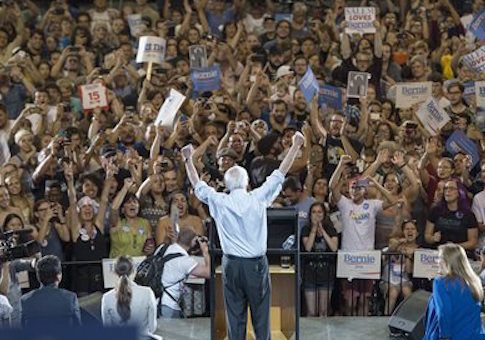
For all of the progress that we have made, America just is not there yet and the cultural swing in that direction might not be complete by November. I remember Senator Bernie Sanders saying this during a town hall recently, and I am still surprised this did not make more headlines. He was asked if he felt that America has made more progress in gender or racial equality.He actually responded that we have made greater strides in racial equality, which might be abundantly surprising to some still in the wake of Freddie Gray and Ferguson. Still, Senator Sanders might be on to something here. After all, as he cited, 'we elected an African-American to the White House', but we still have yet to take the next step to push for a woman.

This all being said, proportionally men dominate the political scene and therefore there is a greater statistical likelihood of a male-dominated field and a man consistently getting these opportunities. That is still an issue that needs to be examined and figured out, but, then again, maybe the right woman has yet to enter the scene. Ultimately, we should not elect a woman just for the sake of achieving a milestone, but I would like to see a woman in the White House and see her continue to put our country in a position to thrive.

So, does it not better suit these candidates to take the risk of coming off as brusque and giving it all they can in this race?

Unfortunately, it's a damned if you do, damned if you don't 'Catch 22' type of situation.

Thursday, January 28, 2016

Maybe Mr. Trump Is On To Something

GOP Presidential candidate Mr. Donald Trump shook the news and the GOP field by opting out of the final GOP debate leading up to the Iowa Caucus. However, where some see plausible weakness, one could argue Mr. Trumps move is both calculating and self-preserving. At the heart of the issue, this could be an exhibition of a true power move by the Republican candidate.

From a certain angle, one could argue the following (and more) about Mr. Trump's power move of his very obvious and voluntary absence:

  • While we can expect a fair amount of jabs thrown his way during the debate over his absence, the candidates would be losing numerous opportunities to make up ground on each other by focusing on the only person that's missing from the fray. The comparatively minimal jabs outweighs the potential devastating body blows of losing a costly exchange to a competitor on a topic that's of particular interest to the Iowan electorate. In his absence the rest of the field will be left to debate each other possibly leading to a growing parity in the middle-tier while Mr. Trump maintains his dedicated voter base.

  • Mr. Trump has proven time and time again that his soundbites and actions do not have a tangibly negative impact on his standing in the polls. What would cripple a middle-tier candidate like Governor Bush or Governor Kasich bounces off of the impenetrable iron armor that Mr. Trump has created for himself. Perhaps a bit simpleton of an approach, but how would this action lead us to a new end-state? Expect Mr. Trump to hold on to his low 30s in polling both in Iowa and nationwide. 

  • Getting more to the heart of this, is this not an exhibition of one the qualities that has drawn so many people toward this candidate? Mr. Trump's base finds his unapologetic trail-blazing to be quite magnetic. He has consistently pitted himself in an adversarial relationship with the press and this is the display of force that brings the entire struggle to a head. Moreover, the only other institution disdained more than the media is Congress, and Mr. Trump is taking a firm stand against both the Beltway business model and the media networks during his campaign. This might earn him a bit more than the rest might be willing to concede as of 28 January.
Meanwhile, the greatest likelihood here is that Senator Marco Rubio becomes the top target of the rest of the field on the main stage with Senator Cruz looking to separate himself further and the rest of the candidates attempting to win the 'Establishment Blessing' seeking ways to discredit Senator Rubio's record and experience. Iowa historically decides late, but, outside of some last minute jockeying, the major trends of the last several weeks look to prevail on 01 February.

Fascinating times are plentiful in both races and APN plans on keeping up with takes on it. APN will also be tweeting throughout the debate. Be sure to check in!

Welcome to Ameri-Politics Now

Welcome to the newly established Ameri-Politics Now (APN) blog! I won't dwell too much on myself because the real reason you're here is to see what's happening in the political realm. So, keeping it short, national politics has been a longtime passion for me. I studied it throughout my education and worked in the field. I hope to bring my perspectives to you and welcome your thoughts at any time on any of the topics raised in this forum.

The APN pledge to readers is maintain as much independence as humanly possible in the expressed opinions and observations made in this blog. APN intentionally does not divulge party affiliation or previous work history in order to keep the level of overall neutrality.

APN thanks you in advance for your support and readership and I look forward to breaking down some of the most pressing issues facing us today.