Showing posts with label politics. Show all posts

Saturday, March 5, 2016

My Political Tidal Rage

It feels like it's been a long time since I've completed a post on this blog. I've tried to start new posts up, I promise. You see, I would start writing and then realize that I had
gone off the reservation. Here's what I mean by that. Anything that's worth writing about right now (and there's so much that is worth it) genuinely begins to make me angry when I start writing. I veer off, get a little bit partisan/spiteful/personal. I lose the tone that I'm trying to maintain.

The truth is that this election is bringing out the intellectual worst of me.

I think we all look around and see the most ridiculous spectacle in politics that we've seen in at least one, if not two, generations. Listening to CSPAN earlier, a guest equated the current insurgency on both sides to the Goldwater insurgency in the 60s. Interestingly enough, I do see a bit of truth in that. Similar to now, a counter-establishment candidate came along and riled the people up. Before the establishment knew what was happening and realized this was a serious threat, it was too late and Goldwater became the inevitable nominee. It was stated that the night Goldwater became the nominee for the GOP was the beginning of the 'modern era' of the Republican party, that is until now.

Donald Trump's rise and momentum is analogous to the movement 60 years ago, but Goldwater is certainly no where near the character that Donald Trump is. He certainly never had the luxury of social media and a 24/7 news cycle either. This leads us to the advent of the new Republican party, a marriage between populism and a persistent media with an injection of rabid anger. Things will be getting strange for the Party's elites for the remainder of this election cycle and the next few congressional cycles too until this new movement figures itself out.

Donald Trump is a bipartisan product that was conceived from a toxic environment of stagnation, political polarization, and a frustrating lack or results. I say again, a BIPARTISAN product. This is not solely the fault of the President's party or the controlling party in Congress. Their inability to work for America forced the American people to find the most disruptive candidate that gave the best chances for a hard reset they so desperately desired.

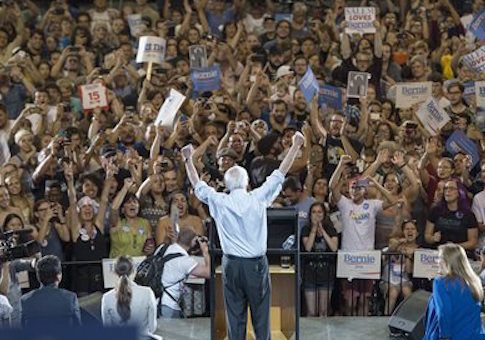
Now, on the Democratic side, that counter-establishment candidate in Bernie Sanders is fading but not gone. The Establishment will likely win out and award Hillary Clinton the nomination. While Sanders will not likely be in the national political conversation for many more weeks or months, his impact and the challenging of the status quo will certainly linger and be ever-present in the Democratic Party for some time, which will likely force any front-runner further to the Left to maintain support.

So, this is where we're at. I wrote a piece called the Hoberman Sphere Cycle, which argued that parties' candidates will expand out to the poles to win over the support of their party but contract back to the center during the General election. I'm not backtracking from that completely, but the current trajectory is not kind to my analysis. My hope is that both Mrs. Clinton and Mr. Trump make a very delicate dance back to the center, but their tidal wave of support is currently built on rage. It is a rage that symbolizes the entire 2016 election cycle and a rage that has been built to such a burning fury over the past several months that I doubt there is a legitimate means to quell the flames and return civility to the discussion.

Let's face it. As citizens and voters, we have been dealt a horrible hand this year. On the Republican side, the remaining legitimate contenders are a reality TV star/business mogul with overly questionable character attributes. There is a Texas Senator that has changed his position more times on key issues over the last several years than I care to count and has no friends in Congress Then there is a Florida Senator that cannot show up to work and doesn't have enough of an 'it factor' to be many peoples' first choice.

On the Democratic side, we have a bona fide socialist that, while well-intentioned, is completely out of his element and is largely a single-issue candidate. Then there is a candidate who is synonymous with scandal, questionable decision-making, and lacks an ability to be consistently honest.
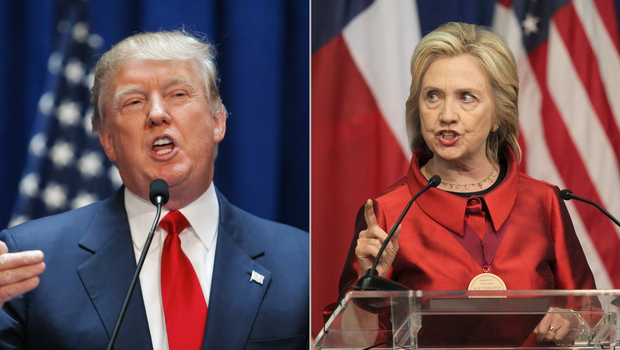
This is what we have to work with. No wonder the anger is at a fever pitch in this country. We deserve better than this, we truly do. For months, the candidates have not even engaged in true policy discussions. Instead, there has been the same type of bickering and toxicity that is the cornerstone of the same Federal leadership and system the country has grown to abhor. So, even when we hope for something new, all we get is more of the same.

Truthfully, a third-party candidate would not solve this, it might even make it a more contentious and splintered environment. So, we need to work with the team we have right now.

I have always hated highlighting problems without providing a solution to consider. Yet, here I am, doing just that. I don't know what the solution is. It can't just suffice to tell the respective parties to 'do better', but I find that I'm a critical hope deficit at the moment. That is painful.

APN readers, I don't recognize my country right now, but it needs to go find itself in a hurry.

Saturday, February 27, 2016

Christie Endorsement is Small Beans....Right Now

The news outlets went into a frenzy yesterday when Donald Trump secured the endorsement of former rival, presidential candidate, and 'Establishment' governor, Chris Christie. All sorts of articles came forward exclaiming that there are 'cracks in the Establishment', 'GOP finally embracing Trump', and other feel-good or -bad stories, depending on your perspective, but I need to put this out there.

Chris Christie's endorsement of Donald Trump just isn't a big deal.

I have always been curious about Governor Christie's establishment label. It doesn't make sense how a liberal Republican in one of the most liberal states and who acts far outside the mainstream is able to take the label of establishment. Personally, the only true establishment candidates in this race have been Marco Rubio, Jeb Bush, Scott Walker, maybe Lindsey Graham, and maybe Bobby Jindal. (Which brings me to the side tangent that the 'Establishment' field has never actually been that crowded, but that's a teaser for another article.)

Here are some facts about Chris Christie for your consideration.
  1. Governor Christie was ranked as the 23rd most conservative governor our of 31 Republican governors, per the linked Huffington Post blog. That's far below fringe Establishment candidate John Kasich (12th) and former candidate Scott Walker (2nd). Not arguing for or against the merits of his philosophy, but ranking that low amongst Republicans arguably places him outside of the mainstream and thus outside of what is largely considered the Establishment

  2. As of November 2015, Chris Christie had the fifth lowest approval rating for any Governor in the U.S. Breaking that down just a bit further, he had the fourth lowest approval rating for a Republican governor. Arguably, even if he was in the GOP mainstream, this is a candidate that is disadvantageous to have in your corner anyway. If their state can't get behind them, how can a nation? Moreover, how does that support bolster another candidate's credentials in any way? Perhaps it could help Trump appear even more counter-establishment than he already does?

  3. According to Real Clear Politics national polling, at no point in time has Chris Christie eclipsed 4.8 percent of the support. The only early state he ever reached double digit support in was New Hampshire, and since that race is over there is no true impact that his presence or support would have within another state. This has about as much impact as Rick Santorum endorsing Marco Rubio.

  4. This is going to sound a little bit personal, but hear it out. Apologies to APN's New Jersey readers, but a YouGov poll in 2015 ranked New Jersey as the most disliked state in the entire country. Moreover....New Jersey was the ONLY disliked state out of 50. How does that apply here? In nearly every case, consciously or subconsciously, we will associate our feelings about a state with a candidate. The more credibility a state has, the more credibility the candidate has. I think a lot of us would find that we're placing more credence towards arguments and stances from a GOP candidate from Texas vice a GOP candidate from Idaho (sorry, Idaho). It just happens that way.
So, what is the liklihood that an unpopular presidential candidate, with one of the lowest approval ratings, from the only disliked state in the Union, and is rated outside of the mainstream will have any sort of tangible impact on Trump's momentum or ratings going forward? This endorsement only matters to three people/entities right now: Chris Christie, Donald Trump, and the media.

The media has fueled the impact of the endorsement, in what must be a slow news cycle, and given it more attention that what it actually deserves. This just is not as important as it would be made out to be.

I think that if you want to get to the ground truth of this, Chris Christie is still fighting for second place. After Christie won re-election in New Jersey in 2013, he ostensibly began his campaign for President. To have that all never really get off the ground, even after three years, is a hard pill to swallow. So, he hasn't given up on the prize yet. Granted, that prize may come in the form of Air Force 2.

Donald Trump was recently quoted as saying that he would look to a political insider to be his running mate. Take that into consideration with the 'long phone call' that Trump said on Morning Joe after the NH Primary, he had with Christie that night. Of course, one cannot forget that the two are very familiar with each other, given all of the real estate and business deals that Trump has in New Jersey. That then leads us to the endorsement.

Christie never had a shot at the presidency in 2016 (maybe in 2012), but maybe again in 2024 if he can land on the ticket as the running mate to Trump. Christie could very well be playing the long game here, and that, to me, is the much larger story in play here. With his term ending soon and no other political prospects on the table, Christie may have made the biggest play yet. Of course, that pure endorsement is not truly all that helpful to Donald Trump for the abundance of reasons listed above, but the play for Christie is an interesting one to watch.

    Monday, February 22, 2016

    Cruz Off Into the Sunset?

    The day before the GOP's Nevada Caucus, we have a brand new race (sort of). Of course, Donald Trump is sitting well-positioned to be the party's eventual nominee, and Marco Rubio is rapidly gaining momentum and endorsements to be the top challenger to Trump. That being said, where does that leave Ted Cruz? John Kasich is virtually a non-factor, outside of Michigan and Ohio, and Ben Carson does not even exist in this conversation. Does the TrustTED candidate live in the middle-ground no-man's land? Though the poll numbers have yet to catch up, Cruz is slowly slipping down the ladder and does not have much hope for climbing back up.

    Let's peel both sides of this apart a little bit.

    Addressing the negative of this argument, Cruz has already won a state, sits in second in the delegate race, and stands to win perhaps dozens more delegates in Texas. He has a substantial funding apparatus between cash-in-hand by the campaign and by Super PACs like 'Keep the Promise'. He's running second in total votes for thus far and even beat out Donald Trump in a national poll in mid-February (run by NBC/Wall St. Journal). This all reads like the making of a top contender for the GOP nomination. On paper, this isn't far from the truth. The Cruz campaign has accomplished some very significant things on paper.

    But does this really feel like Ted Cruz is in power here? Arguably, not so much these days.

    Cruz has slipped from fighting Trump for first to fighting Rubio for second, with Rubio on the quick ascent up the GOP food chain. Cruz only stands to win one more state in his broader pursuit to the nomination, has shown no signs of growth in his standing, continues to create enemies within the GOP, and has the lowest favorability ratings of the remaining top-tier GOP candidates.

    Long story, short, Cruz is running out of capital and may have peaked in Iowa.

    Cruz has had been embroiled in what seems to be scandal after scandal, whether it be the 'Voter Violation' notices, Carson campaign suspension rumors, or misleading videos about Marco Rubio. He has been at the center of one of the dirtier primary campaigns run in years, and that's turned so many moderate and independent voters off to him. That is the exact base that Cruz is going to have to appeal to in a general election, and is potentially the most untouchable base for him.

    Going forward, as we saw in South Carolina, Cruz has capped in support and is blocked from
    avenues to pull in support from other candidates' base. However, both Trump and Rubio have the capability to pull support from Cruz, whether it be the Tea Party base or Evangelicals. So, as Trump maintains his current levels and Rubio continues his 'Marcomentum', we come full-circle to Cruz's sustainability.

    If Cruz continues to stay in the race, he will likely find himself running third in the delegate count behind Trump and Rubio by the end of March. This is certainly an unenviable position to find himself in after starting the race off with so much promise. So, to what end does Cruz even staying in the race serve at this point? Of the three top-tier candidates, he is the only one that lacks a meaningful path to the nomination.

    Therein lies the rub.

    Could the best thing for the GOP be for Cruz to suspend his campaign prior to Super Tuesday? This makes the race a true two-man race and could finally propel a candidate like Rubio over the top against Trump as the anti-Trump alternative. The Rubio camp needs to take a hard look at what it might take to lure Cruz out of the race. Obviously a long shot of epic proportions, but the GOP is otherwise stuck in a rut for the remainder of the primary season.

    This rut leads to one of two conclusions: Trump winning the necessary amount of delegates or pushing the race into a brokered convention that best serves Marco Rubio. Regardless of the scenario, Ted Cruz isn't in it, and there is nothing he can do to change that fate at this point.

    Of course, Cruz and his supporters value their role as the insurgency against the GOP establishment, and there is no certainty that a good portion of his supporters would even go to an establishment candidate. This then begs the bigger question. While Cruz's camp is hard-pressed to find a victorious scenario, who does his persistent presence in the primary truly benefit?

    I believe there is great uncertainty in the fallout of a Cruz suspension, but both the Trump and Rubio campaigns ought to be thinking very hard about courting Ted Cruz, his potential endorsement, and his supporters.

    As the dominoes continue to fall, the single greatest wildcard left in the race may actually be Ted Cruz's endurance for the remainder of the primary season. This viewpoint may be well unpopular at the moment, but the long-view shows no good prospects for Ted Cruz, and he simply is not in control of his own destiny.

    Tuesday, February 16, 2016

    A Super Election Day Revolt

    As messy as things are for the Republican field in the primary election, the Democrats are possibly facing General Election day woes in November. Hillary Clinton and Bernie Sanders are getting an enormous amount and support from the different corners of the party. I'm not yet comfortable saying that this is an unprecedented amount of enthusiasm (because 2008 was at a fever pitch), but the level of emotion right now is certainly epic.

    With the enthusiasm of high emotion comes the decision-making of high emotion, and this emotion that the Democrats have channeled is poised to backfire in November.

    As has recently been making the political headlines, Bernie Sanders and supporters are pushing back hard against the current system that pits Clinton far ahead of him in the all-important delegate count for the party's nomination. Of course, it would make sense that with Sanders' narrowest of losses in Iowa and dominance in New Hampshire, that he should be enjoying a comfortable lead going into a South Carolina that he will likely lose by 15+ points. But there's a catch: superdelegates. The superdelegate deficit for Sanders truly has an insurmountable appearance to it.

    These superdelegates are essentially un-pledged delegates that are free to support any candidate of their choosing regardless of the outcome of their state's primary. They are most commonly in this role based on status (even former status) as an elected party official or leader, though there are still un-pledged delegates that have not held office and were selected by state party officials.

    Here's the situation, before a single Nevada vote is cast and with a surge of momentum propelling Sanders forward he is still behind Clinton by 350 delegates, the great abundance of which are pledged superdelegates. Not to mention, before another single vote is cast, The Hill reports that Clinton has already secured the support of half of the superdelegates in Nevada and South Carolina, furthering her lead before the democratic process can occur.

    No doubt an awesome weapon for Clinton to have in her back-pocket as the head-to-head polls show a slimming national lead and significant public backing escalating for Sanders in other earlier primary states. As this race intensifies, this voting block could be the extra power that the Clinton campaign needs to secure the nomination. Of course, superdelegates are not pledged until the nomination, but the unofficially declared support from these individuals is the current political reality.

    Herein lies the problem. Let's go back to what I said earlier on here, this is a time of high emotion within the Democratic electorate. Bernie Sanders has built a mega-stable of support among the voters that feel out of touch with the system and those that see a government and 'ruling class' that has abandoned them.

    Sanders has built an entire campaign on promising to make things fair again for those that the system is unfair to.

    So, what does it mean when (per the last national poll) 42% of the Democratic voters feel that their efforts have been marginalized by an Establishment and its rules that void out their votes and opinions? What would be the expected reaction of a large base of people that so whole-heartedly buy into a message from a politician, in a time when politicians are outcasts, a politician that people finally feels care about them?

    I submit to you that the reaction would be a very emotional one and would come in two forms in November.

    First, the Sanders supporters could very possibly just decide to vote with their feet as a protest against the entire political machine. Historically, this is one of the most symbolic forms of election day protest and could be the refuge of millions of disenfranchised Democrats. Sanders says it himself. When voter turnout is high and people are energized, Democrats win elections. When the people are demoralized and they do not turn out, Republicans typically win. Now, I can't necessarily speak to how true or not that statement is, but perception is reality. The perceptions then among a demoralized base for Sanders could then very possibly be not to show up in November.

    An alternative, albeit exponentially less likely, is that the Sanders supporters opt to take the fight to Clinton and the Democratic Establishment in November and vote for the opposition as a sign of protest. Is this possible, sure. However, I still believe that the party would find a way to unify before this happens, but for an emotional base, this would also be an emotional reaction.

    All of this to say, that if you are sitting in a leadership role in the DNC and across State parties, it might be time to consider how superdelegates come into play this early in the process. Sanders supporters are already on fire about how this is perceived to be used against them. Easing this now as a point of tension will likely pay dividends at the ballot box in November. With head to head election polls showing razor thin leads, depending on the match-up, a candidate can't afford to be at a loss for votes that they ought to be able to rely on. If the GOP field gets synchronized against the Democrats, November could prove to be a dark time for the Democrats as the people engage in an Election Day Revolt.

    Sunday, February 7, 2016

    The Hoberman Sphere Cycle

    Do you remember that kids toy from years and years ago that was basically this big ball that could be expanded and contracted? Google told me that it was called a Hoberman Sphere. More importantly, why would I even possibly be thinking about a Hoberman Sphere? The truth is that I've been trying to think of the perfect analogy to address what the American electorate is experiencing out of all of the candidates this season thus far (and really many, many seasons before too).

    Much like Hillary Clinton, most candidates aim to start out there campaigns by positioning themselves as the moderate option in their party, the most appealing candidate that can be the collective solution to uniting the party and then America. There's a hiccup in that plan though...the rest of the candidates in the field.

    My time in the political campaign world taught me something pretty obvious: the most energized people will always come out and vote in the primaries. Almost without fail, the most energized people are the people that occupy the more conservative pole (for Republicans) and more liberal pole (for Democrats) of their party. The people that occupy the poles often espouse very passionate views that are outside the moderate wings of their parties.

    We were taught to target the people that were thought to be within that realm. They were targeted for donations, notional support, and even yard signs. Why? They were just the more likely people to agree because it meant that someone on the ballot would be in alignment with them when not really too many other candidates on the ballot had strayed away from the moderate faction of their party.

    This means that many moderates in the party were not as routinely sought after, but, then again, the moderates were often very indecisive about their candidate choice and thus non-committal to a campaign because the field would be so crowded with candidates in the middle of the spectrum. So, over time, the moderates get left behind, as other candidates look to capitalize on the same amount of momentum and support that others are having by moving toward the more 'extreme' poles of their party.

    Another key reason why there is this move to the poles (and we saw this at the Iowa Caucus and into New Hampshire and other early primaries) is to tap that energy into the poles and translate that into voter turnout. A lapse in voter turnout in a candidate's favor typically spells the end of the campaign and the hopes of that candidate. So, during the primary season, that's why we often see much more extreme rhetoric than what we might be accustomed to seeing when two candidates are squaring off against each other in the general election.

    Once a candidate secures their party's nomination, the process begins to rollback many of the primary election pledges and stances that propelled a candidate to the front of the pack. Now what happens is the complete inverse (the contraction of the Hoberman Sphere). Party loyalists are invested, so it becomes a war for the independents and moderates of the opposing party. We now start to hear the media coverage of the battle for independents, who now become the key demographic in the general election.

    Perhaps I'm being naive or optimistic, but there is a lot of alarm sounding around the country that our politics is more divisive than ever. Arguably, it's still divisive, but the problem might not be as dire as is being portrayed. Much of what we're seeing right now is over-reaction to what is still largely typical for the primary campaign season, albeit very atypical personalities that fuel the overall concern.

    Of course, the sphere semi-expands again during the general election, though the tension is not aimed within the party. Candidates go into full-court press to do two things: make greater strides to move their platform to the middle and argue that their opponents is far extreme of the broader American electorate.

    So, keep calm for now, readers. We're just along for the ride inside of a continuous, age-old political loop. The only way to exercise some measure of control it is by try and control who sits in the Oval Office.

    Let me know what you think! Please comment and/or share!

    Wednesday, February 3, 2016

    Digging the Political Grave

    Senator Ted Cruz ran a masterfully tactical campaign in the closing days leading up to the Iowa Caucus. In fact, he ran a great campaign literally hours leading up to the casting of the first votes. An APN tweet from last week noted that Senator Rubio acts like he wants the Presidency the most, but Cruz is truly the one playing the game the best at this point.

    Ground game, fundraising machine, and Iowa Caucus momentum aside, Cruz is on a different level than the rest of the candidates right now in the GOP field. Mr. Trump can bring the crowds and Governor Bush can lean on Right to Rise Super PAC, but their failures lie in their reliance on words. Cruz's multidimensional game includes actions that potentially no other candidate is readily conversant in so far.

    However, Cruz's recent actions are tactically brilliant yet strategically short-sighted.

    Since becoming very competitive with Mr. Trump in the weeks prior to the Iowa Caucus spanning into the hours before the initial voting, Cruz's "leak" about the Carson campaign suspension as well as 'Voter Violation' incident has sprung the campaign into a new light. Many of Cruz's competitors are attacking the campaign for dishonest, and Mr. Trump is going as far as calling for a nullification of the results of the Iowa Caucus and have a re-vote. That being said, the Cruz campaign has not done anything illegal and any movement to alter the results now ought to be out of the question.

    Cruz is doing what it takes to win and doing it more than anyone else arguably on either side of the aisle. Even more than that, he knows it. Cruz was quoted by CNN as saying "I will apologize to no one for using every tool we can to encourage Iowa voters to come out and vote". The merits of the tactics aside, it is indisputable thus far that they have achieved results. That is the tactically brilliant portion of the argument.

    There is an error to these ways though. These tactics largely rely on one thing to absolve the memory of their employment: momentum. In sports, they say that winning cures all ills. Much like in sports, the same applies in the political realm. A candidate can always brush away things he/she did or said when it results in a democratically elected win. At that point, the victories begin to mount and the momentum sweeps prior transgressions under the rug. That's it. That's the nature of this beast, compounded by the nature of a 24-hour news cycle.

    But here's the hiccup in the philosophy. Hell hath no fury like a political candidate's supporters scorned. Similar to the hardened supporters of Mr. Trump, Cruz's allegiant supporters will not waiver despite the mounting allegations against the campaign. So, there's always a base for Senator Cruz to rely on. However, as candidates begin dropping out of the race, they remember their wronged candidate. That wronged candidate that was a manifestation of their own hopes and dreams for the country. An attack on their candidate is an inherent attack on them.

    So, where do they go? The easy answer is not to Senator Cruz. Realistically, that support gets thrown to whoever is the antithesis to Cruz and who has the ability to defeat him. At this moment, that could very well be Senator Rubio. This is a worst-case scenario for the Cruz's campaign, as the surging Rubio, especially with a possible strong showing in New Hampshire under his belt, beginning to have support coalesce around him from all factions of the Republican party. The establishment is already anti-Cruz, but the supporters of the remaining candidates may also soon have reason to as well.

    As the negative attention builds on Cruz's tactics (presuming there is more to follow), generally and newly uncommitted voters weigh two factors heavily as the primary tempo increases: electability and likability. With everything mentioned prior to this statement, the aggregate effect of these tactics, in addition to the media's likely demonization of Cruz will lead voters to feel positively about either that electability or likability, which spells trouble for the currently hot Cruz campaign.

    The Iowa hurdle has sense been cleared, and now it's time for the Cruz camp to take a step back and take the long view in order to survive long-term. Relying purely on momentum may not be enough and, even worse, may be naive with just one very close victory in one primary thus far. From the outside looking in, Senator Cruz is in the act of digging a political grave for himself. Everything is still so early and not so far along that the ship cannot be righted, but the true conundrum is the following question. Does an overall strategy shift and denial of the tactics that have gotten him to this point take away from the appeal he has with his base and put a strangle on his ability to operate in the ways he has used to propel him toward the front?

    Thursday, January 28, 2016

    Maybe Mr. Trump Is On To Something

    GOP Presidential candidate Mr. Donald Trump shook the news and the GOP field by opting out of the final GOP debate leading up to the Iowa Caucus. However, where some see plausible weakness, one could argue Mr. Trumps move is both calculating and self-preserving. At the heart of the issue, this could be an exhibition of a true power move by the Republican candidate.

    From a certain angle, one could argue the following (and more) about Mr. Trump's power move of his very obvious and voluntary absence:

    • While we can expect a fair amount of jabs thrown his way during the debate over his absence, the candidates would be losing numerous opportunities to make up ground on each other by focusing on the only person that's missing from the fray. The comparatively minimal jabs outweighs the potential devastating body blows of losing a costly exchange to a competitor on a topic that's of particular interest to the Iowan electorate. In his absence the rest of the field will be left to debate each other possibly leading to a growing parity in the middle-tier while Mr. Trump maintains his dedicated voter base.

    • Mr. Trump has proven time and time again that his soundbites and actions do not have a tangibly negative impact on his standing in the polls. What would cripple a middle-tier candidate like Governor Bush or Governor Kasich bounces off of the impenetrable iron armor that Mr. Trump has created for himself. Perhaps a bit simpleton of an approach, but how would this action lead us to a new end-state? Expect Mr. Trump to hold on to his low 30s in polling both in Iowa and nationwide. 

    • Getting more to the heart of this, is this not an exhibition of one the qualities that has drawn so many people toward this candidate? Mr. Trump's base finds his unapologetic trail-blazing to be quite magnetic. He has consistently pitted himself in an adversarial relationship with the press and this is the display of force that brings the entire struggle to a head. Moreover, the only other institution disdained more than the media is Congress, and Mr. Trump is taking a firm stand against both the Beltway business model and the media networks during his campaign. This might earn him a bit more than the rest might be willing to concede as of 28 January.
    Meanwhile, the greatest likelihood here is that Senator Marco Rubio becomes the top target of the rest of the field on the main stage with Senator Cruz looking to separate himself further and the rest of the candidates attempting to win the 'Establishment Blessing' seeking ways to discredit Senator Rubio's record and experience. Iowa historically decides late, but, outside of some last minute jockeying, the major trends of the last several weeks look to prevail on 01 February.

    Fascinating times are plentiful in both races and APN plans on keeping up with takes on it. APN will also be tweeting throughout the debate. Be sure to check in!

    Welcome to Ameri-Politics Now

    Welcome to the newly established Ameri-Politics Now (APN) blog! I won't dwell too much on myself because the real reason you're here is to see what's happening in the political realm. So, keeping it short, national politics has been a longtime passion for me. I studied it throughout my education and worked in the field. I hope to bring my perspectives to you and welcome your thoughts at any time on any of the topics raised in this forum.

    The APN pledge to readers is maintain as much independence as humanly possible in the expressed opinions and observations made in this blog. APN intentionally does not divulge party affiliation or previous work history in order to keep the level of overall neutrality.

    APN thanks you in advance for your support and readership and I look forward to breaking down some of the most pressing issues facing us today.