Showing posts with label establishment. Show all posts

Saturday, February 27, 2016

Christie Endorsement is Small Beans....Right Now

The news outlets went into a frenzy yesterday when Donald Trump secured the endorsement of former rival, presidential candidate, and 'Establishment' governor, Chris Christie. All sorts of articles came forward exclaiming that there are 'cracks in the Establishment', 'GOP finally embracing Trump', and other feel-good or -bad stories, depending on your perspective, but I need to put this out there.

Chris Christie's endorsement of Donald Trump just isn't a big deal.

I have always been curious about Governor Christie's establishment label. It doesn't make sense how a liberal Republican in one of the most liberal states and who acts far outside the mainstream is able to take the label of establishment. Personally, the only true establishment candidates in this race have been Marco Rubio, Jeb Bush, Scott Walker, maybe Lindsey Graham, and maybe Bobby Jindal. (Which brings me to the side tangent that the 'Establishment' field has never actually been that crowded, but that's a teaser for another article.)

Here are some facts about Chris Christie for your consideration.
  1. Governor Christie was ranked as the 23rd most conservative governor our of 31 Republican governors, per the linked Huffington Post blog. That's far below fringe Establishment candidate John Kasich (12th) and former candidate Scott Walker (2nd). Not arguing for or against the merits of his philosophy, but ranking that low amongst Republicans arguably places him outside of the mainstream and thus outside of what is largely considered the Establishment

  2. As of November 2015, Chris Christie had the fifth lowest approval rating for any Governor in the U.S. Breaking that down just a bit further, he had the fourth lowest approval rating for a Republican governor. Arguably, even if he was in the GOP mainstream, this is a candidate that is disadvantageous to have in your corner anyway. If their state can't get behind them, how can a nation? Moreover, how does that support bolster another candidate's credentials in any way? Perhaps it could help Trump appear even more counter-establishment than he already does?

  3. According to Real Clear Politics national polling, at no point in time has Chris Christie eclipsed 4.8 percent of the support. The only early state he ever reached double digit support in was New Hampshire, and since that race is over there is no true impact that his presence or support would have within another state. This has about as much impact as Rick Santorum endorsing Marco Rubio.

  4. This is going to sound a little bit personal, but hear it out. Apologies to APN's New Jersey readers, but a YouGov poll in 2015 ranked New Jersey as the most disliked state in the entire country. Moreover....New Jersey was the ONLY disliked state out of 50. How does that apply here? In nearly every case, consciously or subconsciously, we will associate our feelings about a state with a candidate. The more credibility a state has, the more credibility the candidate has. I think a lot of us would find that we're placing more credence towards arguments and stances from a GOP candidate from Texas vice a GOP candidate from Idaho (sorry, Idaho). It just happens that way.
So, what is the liklihood that an unpopular presidential candidate, with one of the lowest approval ratings, from the only disliked state in the Union, and is rated outside of the mainstream will have any sort of tangible impact on Trump's momentum or ratings going forward? This endorsement only matters to three people/entities right now: Chris Christie, Donald Trump, and the media.

The media has fueled the impact of the endorsement, in what must be a slow news cycle, and given it more attention that what it actually deserves. This just is not as important as it would be made out to be.

I think that if you want to get to the ground truth of this, Chris Christie is still fighting for second place. After Christie won re-election in New Jersey in 2013, he ostensibly began his campaign for President. To have that all never really get off the ground, even after three years, is a hard pill to swallow. So, he hasn't given up on the prize yet. Granted, that prize may come in the form of Air Force 2.

Donald Trump was recently quoted as saying that he would look to a political insider to be his running mate. Take that into consideration with the 'long phone call' that Trump said on Morning Joe after the NH Primary, he had with Christie that night. Of course, one cannot forget that the two are very familiar with each other, given all of the real estate and business deals that Trump has in New Jersey. That then leads us to the endorsement.

Christie never had a shot at the presidency in 2016 (maybe in 2012), but maybe again in 2024 if he can land on the ticket as the running mate to Trump. Christie could very well be playing the long game here, and that, to me, is the much larger story in play here. With his term ending soon and no other political prospects on the table, Christie may have made the biggest play yet. Of course, that pure endorsement is not truly all that helpful to Donald Trump for the abundance of reasons listed above, but the play for Christie is an interesting one to watch.

    Tuesday, February 16, 2016

    A Super Election Day Revolt

    As messy as things are for the Republican field in the primary election, the Democrats are possibly facing General Election day woes in November. Hillary Clinton and Bernie Sanders are getting an enormous amount and support from the different corners of the party. I'm not yet comfortable saying that this is an unprecedented amount of enthusiasm (because 2008 was at a fever pitch), but the level of emotion right now is certainly epic.

    With the enthusiasm of high emotion comes the decision-making of high emotion, and this emotion that the Democrats have channeled is poised to backfire in November.

    As has recently been making the political headlines, Bernie Sanders and supporters are pushing back hard against the current system that pits Clinton far ahead of him in the all-important delegate count for the party's nomination. Of course, it would make sense that with Sanders' narrowest of losses in Iowa and dominance in New Hampshire, that he should be enjoying a comfortable lead going into a South Carolina that he will likely lose by 15+ points. But there's a catch: superdelegates. The superdelegate deficit for Sanders truly has an insurmountable appearance to it.

    These superdelegates are essentially un-pledged delegates that are free to support any candidate of their choosing regardless of the outcome of their state's primary. They are most commonly in this role based on status (even former status) as an elected party official or leader, though there are still un-pledged delegates that have not held office and were selected by state party officials.

    Here's the situation, before a single Nevada vote is cast and with a surge of momentum propelling Sanders forward he is still behind Clinton by 350 delegates, the great abundance of which are pledged superdelegates. Not to mention, before another single vote is cast, The Hill reports that Clinton has already secured the support of half of the superdelegates in Nevada and South Carolina, furthering her lead before the democratic process can occur.

    No doubt an awesome weapon for Clinton to have in her back-pocket as the head-to-head polls show a slimming national lead and significant public backing escalating for Sanders in other earlier primary states. As this race intensifies, this voting block could be the extra power that the Clinton campaign needs to secure the nomination. Of course, superdelegates are not pledged until the nomination, but the unofficially declared support from these individuals is the current political reality.

    Herein lies the problem. Let's go back to what I said earlier on here, this is a time of high emotion within the Democratic electorate. Bernie Sanders has built a mega-stable of support among the voters that feel out of touch with the system and those that see a government and 'ruling class' that has abandoned them.

    Sanders has built an entire campaign on promising to make things fair again for those that the system is unfair to.

    So, what does it mean when (per the last national poll) 42% of the Democratic voters feel that their efforts have been marginalized by an Establishment and its rules that void out their votes and opinions? What would be the expected reaction of a large base of people that so whole-heartedly buy into a message from a politician, in a time when politicians are outcasts, a politician that people finally feels care about them?

    I submit to you that the reaction would be a very emotional one and would come in two forms in November.

    First, the Sanders supporters could very possibly just decide to vote with their feet as a protest against the entire political machine. Historically, this is one of the most symbolic forms of election day protest and could be the refuge of millions of disenfranchised Democrats. Sanders says it himself. When voter turnout is high and people are energized, Democrats win elections. When the people are demoralized and they do not turn out, Republicans typically win. Now, I can't necessarily speak to how true or not that statement is, but perception is reality. The perceptions then among a demoralized base for Sanders could then very possibly be not to show up in November.

    An alternative, albeit exponentially less likely, is that the Sanders supporters opt to take the fight to Clinton and the Democratic Establishment in November and vote for the opposition as a sign of protest. Is this possible, sure. However, I still believe that the party would find a way to unify before this happens, but for an emotional base, this would also be an emotional reaction.

    All of this to say, that if you are sitting in a leadership role in the DNC and across State parties, it might be time to consider how superdelegates come into play this early in the process. Sanders supporters are already on fire about how this is perceived to be used against them. Easing this now as a point of tension will likely pay dividends at the ballot box in November. With head to head election polls showing razor thin leads, depending on the match-up, a candidate can't afford to be at a loss for votes that they ought to be able to rely on. If the GOP field gets synchronized against the Democrats, November could prove to be a dark time for the Democrats as the people engage in an Election Day Revolt.

    Wednesday, February 10, 2016

    The Counter-Insurgency That Never Was

    If it is not abundantly obvious by now, the GOP Establishment is in a world of hurt. We're talking about sprained ACLs in both knees kind of hurt. This could be special kind of hurt. The Establishment is currently at the end of a lifeline with the rope about to be cut as the candidacies of Donald Trump and Ted Cruz surging through the Republican base. 

    In short, the RNC has failed its party, and Reince Priebus' lack of leadership keeps the scatter-shot GOP field in a continued state of mayhem. The Establishment candidates have shown no sustained signs of life or true, long-term viability through two primary nights, and they are receiving no support or guidance from the national party. This is, of course, based on the key assumption here that what's good for the Establishment is good for the RNC and vice-versa.

    Though we have to ask some key questions. Will an anger-based anti-establishment sentiment be the new normal for the GOP? Is the 'mainstream platform' of the party finally found itself completely out of touch with its base? Is there an ability for the national party to adapt? Is there a will to adapt? 

    The Republican insurgency averages about 51% of the national vote with the now remaining four candidates (to include three Establishment candidates) fighting and clawing for some standing. To be fair, anything is still very possible and no single candidate has a true stranglehold on the path to the nomination. Yet, to quote Bane in the Dark Knight Rises, do you feel like you're in control? The mainstream of the party clearly isn't. Traditional things like money and television ad campaigns just aren't amounting to what they used to.


    Looking back through the numbers (source: NPR), how frightened must the Establishment be? Traditional campaigning is not working, at least not in Iowa or New Hampshire. Just pointing toward New Hampshire, the four establishment candidates combined for 45% of the vote with total advertising running them an aggregate $2,606 per vote. In contrast, Trump and Cruz combined for 47% of the vote while spending an aggregate $42 per vote. 

    Yes, you read that correctly. 

    I would love to debate the merits of what that all means, but will possibly leave that to a future post. Right now, I want to focus on the state of the GOP establishment and exactly how much worse it stands to get.

    The last week of the Christie campaign and the post-New Hampshire primary exit of the New Jersey governor shook the foundation of this race. Chris Christie arguably has had and may have the most significant impact on the GOP for the entire election cycle. We were very well aware of the Marcomentum that was taking place after the Iowa Caucus; however, a stumble and stall of the Rubio campaign, caused by an assailing Christie at the last GOP debate, changed the questions we asked about the primary. We went from asking if the Establishment can possibly go into cruise control with a surging candidate to wondering if they even have a horse they can back.

    Chris Christie, in what has been described as a political murder-suicide, assassinated the Rubio campaign and sent the Establishment cause into a free fall. Christie incorrectly calculated that assailing the rising Rubio would stifle the Senator's progress all while having the impact of setting himself apart from the rest of the Establishment. Instead, he reaped none of the benefits and tossed a softball into the wheelhouse of the GOP insurgency, who knocked it out of the park.

    Instead of the Establishment finally having someone to rally around and begin to consolidate support for a long-term campaign, they have a mosh pit filled flailing candidates. To make matters even worse for the Establishment, on MSNBC's 'Morning Joe', Mr. Trump informed Scarborough that Christie called him on Tuesday night and the two of them had a long talk. The broad speculation is that Christie is trying to position himself in the Veep-stakes on the Republican ticket. The governor continues to try to make calculating moves but any potential backing of Mr. Trump will continue to bury the Establishment. That will be a real intriguing story-line to watch play out.

    Governor Jeb Bush's camp has made indications of going 'scorched-Earth' on Rubio and Kasich to try and push the other two Establishment candidates out of the race. After observing how that entirely did not work for the Christie campaign, how does this seem like a good idea? If anything, Bush needs to focus on what had been working for Rubio and worked for Kasich in New Hampshire: a positive message. I would submit to you that inner-Establishment desecration will certainly push the insurgency over the top. So why not just try what has worked? If Bush drops out, he hasn't caused any irreparable damage to his Establishment colleagues and the negative campaigning and 'dirty' tactics can be left to Trump and Cruz. That is how you truly set yourself apart in this race. That's what at least shown some signs of working so far. Oh, but there is that wild card still in play, and he goes by W. I suspect he might be making an appearance on the trail sooner than later.

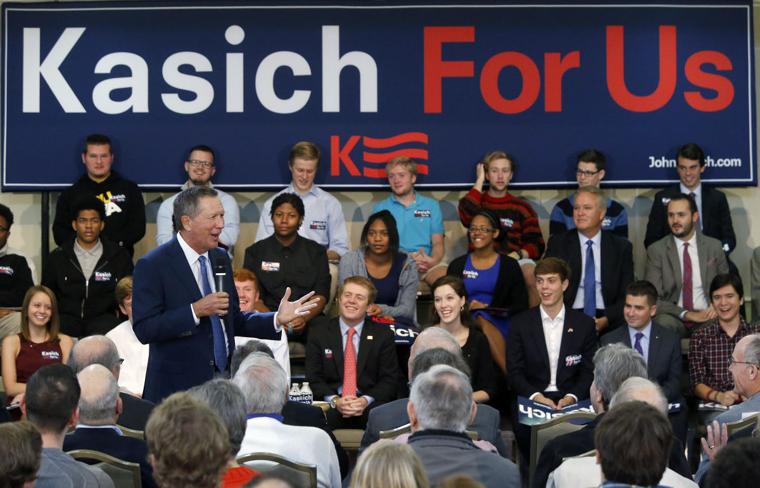
    Governor Kasich is unfortunately a one-state wonder. Kasich hit his peak in New Hampshire and was a really nice story on Tuesday night. The shame here is that Kasich is just so darn likeable. He really is. The problem is that he is running a general election campaign during primary season. His more moderate stances on many core GOP issues are simply out of touch with the rest of the party nationally. That will become painfully obvious as the GOP marches through a series of southern primary elections. I suspect he will drop out shortly after the Michigan primary, which is the next one he stands to do somewhat decently on.

    Regardless of how you shape this issue, even now, the question is not if but when the GOP Establishment will coalesce around Marco Rubio. He still is showing well nationally and in a variety of other primary state polls. He has time, though not so much, to turn this around. He can finish third and maybe even second in South Carolina, which will get him back on the right track. But he has to perform and his ability to rebound is up in the air and has yet to be truly tested. Signs are showing that he will aim to get back onto a positive message going into South Carolina. It doesn't hurt that he has the endorsement of Senator Tim Scott who is trying to make the case for Rubio to the South Carolina electorate.

    Ultimately, the RNC does not yet have faith in the general election viability of the three remaining Establishment candidates. Their inability to manage this race before it really got started put the GOP and perhaps the balance of the country on a very tenuous track. Better management of the field and an understanding of the dynamics within the GOP base and broader electorate could mean a very different story for all candidates still involved. However, the longer the GOP powers that be stall and the more that they want to appease the insurgency, the bleaker that the chances for this counter-insurgency becomes.

    The mainstream and RNC is failing half of its electorate right now. The Party's cold relationship with Trump and Cruz is pretty well known by now, and they're still without a true alternative that can take back the GOP's course. 

    If the national party is actually interested in stopping Trump or Cruz (and this is a very legitimate 'if'), time is slipping for creating a strong counter-insurgency. As it stands going into South Carolina, this is still the counter-insurgency that never was.

    Tuesday, February 9, 2016

    The Swamp Got Murkier?

    The New Hampshire Primary does not have a precision-riddled history. In fact, the New Hampshire results consistently do very little for predicting the ultimate winner of the two parties' nominations. Though the 'First in the Nation' primary has a bet of a better track record than the Iowa Caucus, this just isn't the pressure gauge to make any sort of long-term judgement by.

    If you look at each party's primary dating back to 1980 (excluding unopposed runs), the Granite State primary has only had a 9/14 accuracy, that's a 64% accuracy rate. Arguably though, since 2000, the New Hampshire primary has been much more accurate than since 1980, but all trends rely on history and many, many data points. That being said, I'm not putting much stock into what the primaries tonight mean for either party.

    So, you ask, what do the primaries do? What's the point then?

    Politically speaking, there are significant primary and secondary order effects, potentially much more so for the GOP than the Democratic field. With regard to Republicans, there are two factors that come into play when the results are finalized: momentum and the culling of the herd. Momentum was all of the post-Iowa talk. We heard about the bull market on Marco Rubio and Ted Cruz and the bear market on Donald Trump and the three establishment candidates.

    Obviously, this market trends in all directions at all times as we saw with Marco Rubio's stifled #Marcomentum post-Saturday's debate and John Kasich's seemingly steady climb toward the top of the second tier when he was never awarded a single delegate in Iowa. As we scream (or crawl) closer to the respective conventions, the next wave of momentum for the insurgents and the establishment will be key for anyone's long term viability.

    On that matter of long-term viability, the New Hampshire primary also has the historical effect of culling the herd....historically. 2016 may very well be an exception with all 11 candidates that entered tonight (yes, even Gilmore) on the road to South Carolina. That aside, textbooks tell us that the field ought to be whittled down by a candidate or two, which means that you have brand new, undeclared voters that are just looking for a new home. This type of open capital puts candidates into a free-for-all to vie for the affections of these newly available supporters. Depending on who drops out (Fiorina? Christie? Carson?) that opens up a lot of people that swing the balance of the primary in a major way.

    On the Democratic side, there's obviously going to be no culling of any herd. You have two candidates, and you're going to have two candidates until the winning delegates total is reached by one of them. Again, this comes back to the momentum argument. By all accounts (pre-results), Sanders ought to win the primary, but now this is where the expectations game comes into play.

    There is a chance that Bernie Sanders blows his shot at the nomination tonight even if he wins. Expectations going back to just last week had the Vermont Senator sitting at a comfortable, victory formation distance. In the last week, polls show that Hillary is closing that gap. Now again, probably not enough to win, but she sets herself up very well going forward if the loss is in the low to mid single digits. She beat expectations and completed an effort to make her the second Clinton 'Comeback Kid'.

    On the other hand, New Hampshire feels the Bern, we have a long race ahead of us, America.

    There's a good chance that tonight's election does us no favors, but isn't that the fun of watching all of this? Politics itself is not a spectator sport, but being a spectator at this juncture is all the rage to me.